The Work Behind the Wheel
An autonomous truck may give a carrier more flexibility in how it schedules equipment and serves customers. Automation may also reduce some risks associated with human error and exposure. Those benefits need to be measured in service, alongside the work required to keep the vehicles operating.
Anyone who has managed trucks knows how much of a trip depends on arrangements made before the vehicle leaves the yard. Maintenance needs to be current. Someone has to answer when trouble develops. Roadside and recovery providers need enough information to bring the right equipment.
A driverless operation still needs those arrangements. A person assisting remotely depends on a working connection and an accurate account of the vehicle's condition. If the problem calls for someone at the scene, a technician or contractor has to be available close enough to help. Coverage that looks adequate on a map may be difficult to deliver at night or far from a service location.
Several vehicles may need help together. Bad weather, a software problem, or a communications interruption can tie up the same people the operation relies on for routine assistance. Before adding vehicles or extending service hours, management needs to know how the support team will handle that demand.
The Federal Roadside Exemption
Federal rules generally require the driver of a commercial vehicle stopped on the roadway or shoulder, other than for a necessary traffic stop, to activate hazard flashers and place warning devices within the required time. Physically placing those devices presents an obvious difficulty for a truck with no driver onboard.
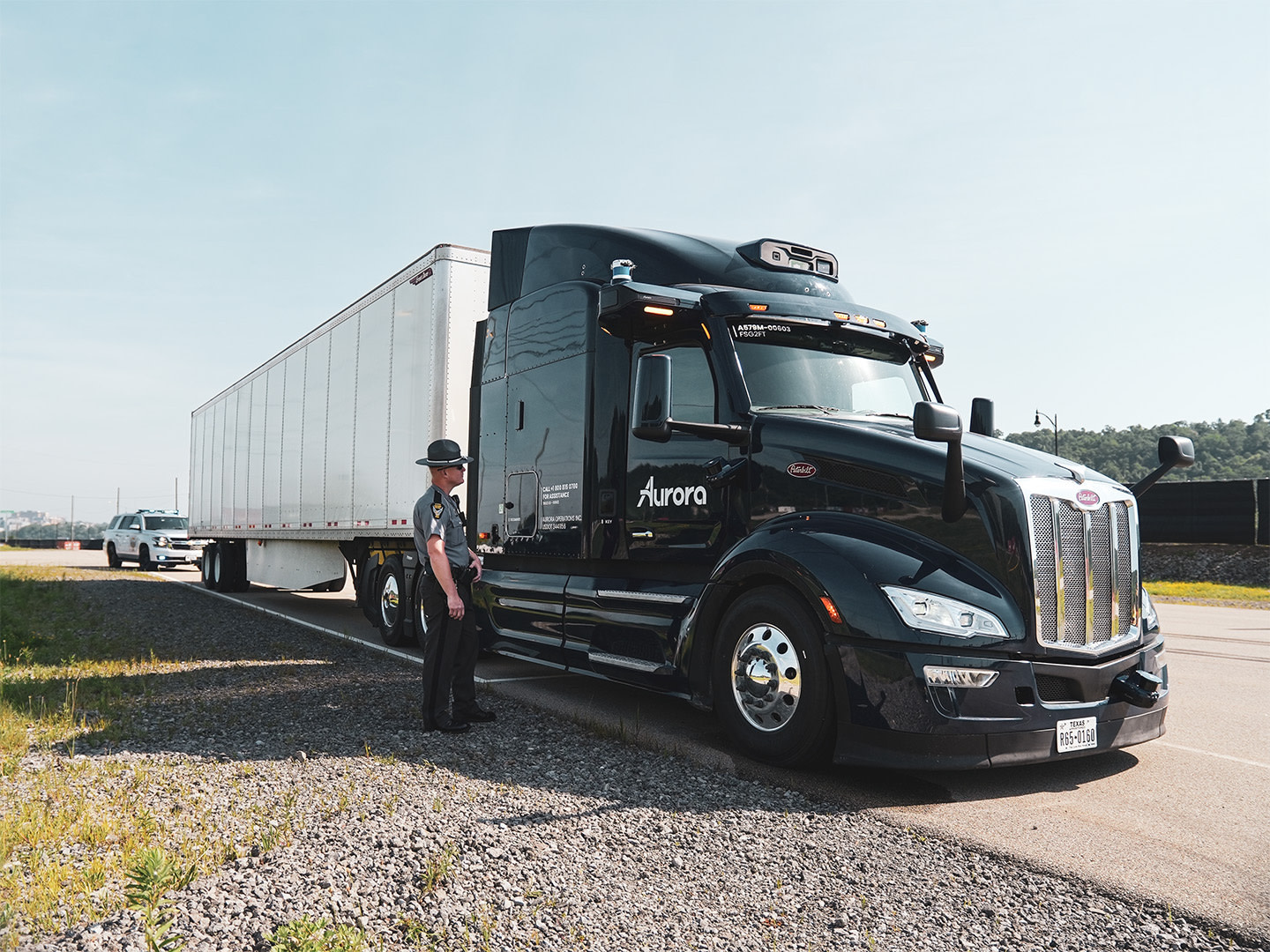
Aurora sought an alternative using cab-mounted beacons. FMCSA denied an earlier, broader request, then considered a revised application with more specific limits and supporting evidence. The agency concluded that the beacons would likely provide equivalent or greater safety under the exemption's conditions.
Qualifying carriers must meet requirements for beacon placement, performance, activation, backup power, and reporting. Carriers other than Aurora must notify FMCSA before operating under the exemption. Its scope is limited to eligible Level 4 vehicles and their validated operating conditions.
A carrier using the beacons still needs to establish whether a stopped truck can safely remain where it is. Someone has to assess its condition and arrange assistance if it cannot proceed. That response may involve decisions about the shoulder, passing traffic, access for recovery equipment, and how long the truck is likely to remain there.
PRAEVIS editorial perspective: A vehicle may complete its assigned task without a driver. The organization still has to manage what happens when that task cannot be completed.
Remote Assistance and Local Response
California's SB 1246 addresses remote drivers, local incident technicians, coordination with emergency responders, fleetwide failures, and response reporting. Some implementation details remain to be developed. Operators will need to follow those developments as the relevant provisions approach their operative dates.
An officer arriving at a stopped vehicle needs a way to reach someone who can explain what has happened and arrange help. A call that goes unanswered or reaches a person without the necessary information can delay the response. These are practical service requirements for the company operating the fleet.
Before entering a new service area, management should establish who can reach its vehicles and how long that is likely to take. Recovery agreements need to account for the roads traveled, operating hours, and equipment involved. Public safety agencies also need to know how to contact the company before they encounter one of its vehicles during an emergency.

These arrangements belong in the financial plan. Remote support staff, local technicians, backup communications, and recovery agreements all cost money. A carrier evaluating the savings from removing onboard drivers needs to include the cost of supporting the vehicles that replace them.
The cost of a completed trip should reflect the people and resources needed when service is interrupted. Otherwise, an expansion decision may rest on assumptions that have not been tested against the conditions the fleet will face.
Decisions for Executives and Boards
Executives reviewing an autonomous fleet will hear about miles traveled, trips completed, and technical performance. They should also ask what happened on the trips that needed outside help. Response times, unresolved incidents, and support staff workload can help management judge whether the operation is ready to expand.
The people supporting the fleet need clear authority to act. Someone must be able to pause service when conditions exceed the operation's limits, and staff need to know when to bring that person into the decision. If routine problems already depend on informal workarounds or staff staying beyond their scheduled hours, management needs to understand that before approving more vehicles.
In my forthcoming book, Bilingual Leadership, I examine why operational performance and safety are often discussed separately. In an autonomous fleet, decisions about deployment dates and operating hours also determine the staffing and recovery coverage the company will need. Leaders have to consider those commitments together.
The federal exemption and California law carry different obligations. Each gives the company work to carry out beyond the driving task. Assigning that work across departments or vendors requires follow-up from the carrier to make sure the arrangements function in practice.